 JAPAN
Explore Tokyo districts
 Tsukiji
, Tokyo: Hongwanji architecture, market ingredients and Namiyoke’s giant lions
Tsukiji offers more than seafood. Start at Hongwanji with its ancient Indian-inspired exterior, browse fish, shellfish, nori, dried foods and tamagoyaki in the Outer Market, then find Namiyoke Shrine’s giant lions and food memorials. Spend a morning with Gaimi, entering the market after 9 am and allowing about 2–3 hours. Add more time for a sit-down meal.
Open this notebook Tsukishima
: monja, old Tsukuda and a Sumida afternoon
Follow GaiMi for one monja lunch, a turquoise-awning café, Tsukuda Sumiyoshi Shrine’s fishing-town story and a relaxed finish along the Sumida. Three stops leave room to enjoy the afternoon.
Open this notebook Tsurugaoka Hachimangu & Wakamiya-oji
: Dankazura, Ponds and a Vermilion Gate
From Kamakura Station's east exit, Dankazura runs along the middle of Wakamiya-oji toward Hachimangu, with a pair of stone guardian dogs beside the second torii. Inside the grounds are red bridges by the ponds, the Maiden pavilion and the upper shrine gate. I'd allow 75–120 minutes for this walk. A long stone staircase leads to the upper shrine; the ponds and lower approach offer a gentler route.
Open this notebook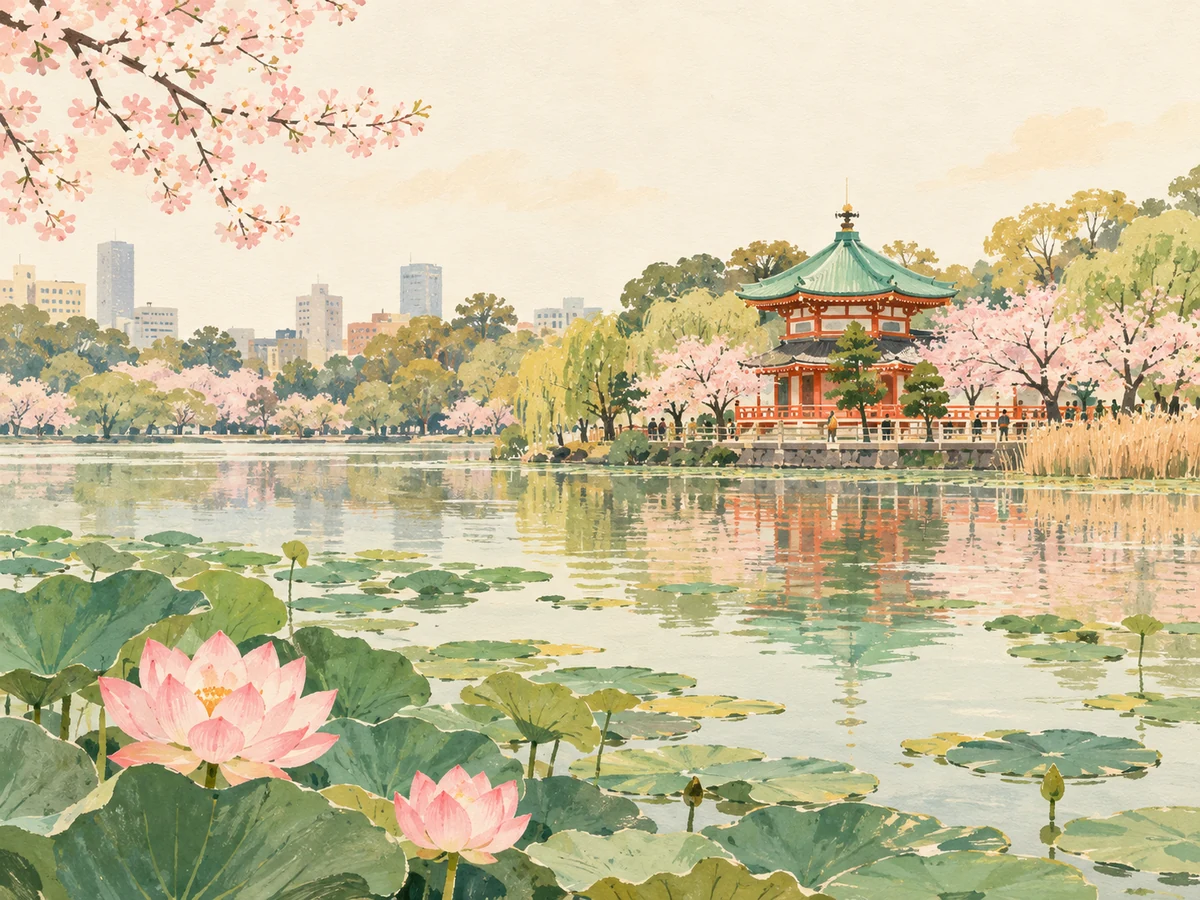 Ueno
One day in Ueno: art in the park, dinner in Ameyoko
Start under the trees in Ueno Park, choose a museum to explore slowly, then spend the afternoon by Shinobazu Pond and in Ameyoko. Gai Xiaomi has gathered visit times, admission details, established eateries and places to take a break. The zoo and museums are alternatives: there is no need to turn a day out into a race.
Open this notebook Yamashita Park
: Waterfront Gardens and a Voyage through Hikawa Maru
From Motomachi-Chukagai Station, I would head first toward Yamashita Park’s gardens and waterfront. Take your time with the Indian Water Tower’s arches, the sister-city fountain and the black-and-white ship alongside. If you have longer, board Hikawa Maru to compare first-class dining, cabins and crew workplaces. For an easier visit, sit on shore and enjoy the harbour.
Open this notebook Yokohama Chinatown
: lantern lanes, a meal and Kanteibyo’s craft
I start at a Chinatown gate, follow the restaurant signs along the main street, then turn into the red-lantern lanes of Ichiba-dori. For a seated meal, compare cuisines, portions and set menus; for a slower browse, look at clothing, everyday goods and gifts. Then we visit Kanteibyo, connecting roof dragons, carved columns and incense burners with the faith and care of this port’s Chinese community.
Open this notebook Motomachi
Yokohama Motomachi: browse the windows, then find your bag at Kitamura
I enter by Motomachi’s phoenix arch and browse windows, leather goods and everyday items across blocks 1–5. Yamate homes and port commerce shaped these daily necessities: notice how frontages leave walking space and how shops present materials. At Kitamura’s head store, compare bag sizes, weight and handle lengths, and ask about custom colours if they interest you.
Open this notebook Red Brick Warehouse & Shinko
: warehouse details and your own CupNoodles
This half-day brings together two very different experiences. We'll trace the Red Brick Warehouse's windows, steelwork and port history, then visit the CupNoodles Museum to see the invention behind an everyday meal. If you'd like to make a cup, I'll plan around its session first and leave the remaining time for the warehouses and waterfront.
Open this notebook Yamate Western Houses
Yamate houses: inside a diplomat’s and a merchant’s homes
I head uphill from Ishikawacho Station to the Home of a Diplomat’s timber tower and garden, then follow Yamate’s roads to Berrick Hall. Both houses welcome visitors inside, so leave time for their rooms: compare formal reception and family life, timber beams, arches and quatrefoil windows. Take slopes and stairs at your own pace; architecture lovers may want longer.
Open this notebook Yuigahama & Zaimokuza
: Waves, Waterbirds and Komyoji's Pondside
Yuigahama's shoreline curves around the bay. As waves retreat, wet sand and river-mouth water catch the light differently. Toward Zaimokuza, public streets lead to Komyoji's seaside entrance, where the timber gate brings a different pace. I'd leave 3–4 hours for the coast and the temple as two parts of the walk. During the main hall's restoration, worship and garden visits follow the open paths.
Open this notebook Yurakucho / Hibiya
Yurakucho & Hibiya: regional shops, Godzilla, park walks and five food stops
For regional Japanese food shopping, a playful Godzilla photo and a satisfying meal, explore Yurakucho and Hibiya at an easy pace. Join GaiMi from Kotsukaikan to Midtown, Hibiya Park and OKUROJI brick arches; choose dim sum, black pork, a French cafe, railway-side seafood or matcha sweets.
Open this notebook